The Founding of the Bronæl Colony
The Vampire Prince’s BrideThe Founding of the Bronæl Colony is the political and communal turning point that converts Brask’s fugitive survival into a collective experiment in freedom. What begins as a desperate attempt to escape imprisonment and execution develops into a settlement for people who want to practice their religion without interference, even though the colony remains exposed to the possibility of pursuit by the Science Board.
Causes and Background
Brask’s colony exists because ordinary legal survival has become impossible. After Brask killed Nylæq, there was no realistic prospect of a pardon, regardless of the circumstances surrounding the killing. For Brask and those who stood with him against Din, death had to be faked because only the appearance of death could keep them from a Stlozyn prison or something worse. Biryl’s decision to falsify their deaths therefore functions as the practical precondition of the colony: concealment is not incidental to its founding but the means by which its inhabitants remain alive and free.
The settlement was not formed by Brask alone. A substantial part of the crew that had supported him against Din followed him to the planet where the colony was established. The planet was not especially welcoming, but it was survivable, and that limited safety was enough to make it preferable to capture. The founding thus carries a double character. It is an act of resistance and a retreat, built not from victory over Stlozyn power but from the fugitives’ ability to disappear beyond its immediate reach.
The Refuge Takes Shape
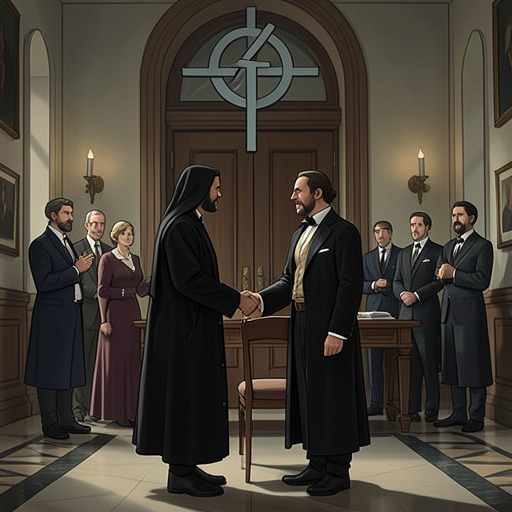
The colony’s earliest arrivals included farmers sent by Trafin. They were seeking the same freedom of religious practice that had drawn Brask and his companions away from Stlozyn control. Their arrival widened the settlement’s purpose beyond the refuge of a single rebel crew: Bronæl became a destination for people whose convictions made conventional life dangerous or intolerable.
The next group consisted of low-ranking scientists who likewise wanted to practice their religion freely. Their presence makes the colony unusually heterogeneous, bringing agricultural workers and scientific personnel into the same precarious community. The shared principle is not profession but religious liberty. Bronæl is held together by a common refusal to accept the Science Board’s authority over belief, rather than by a single occupation, ancestry, or military structure.
The colony’s social reality is also domestic and immediate. Brask is recovering from his injuries and cannot safely carry the triplets, while Libba manages the crying infants and the demands of daily care. Biryl complains about parenthood and the exhaustion of helping, yet Brask understands that Biryl will not abandon them. The babies, the nursery, and the labor of keeping the household functioning place the colony’s political founding beside the ordinary work of sustaining life.
Government and Danger
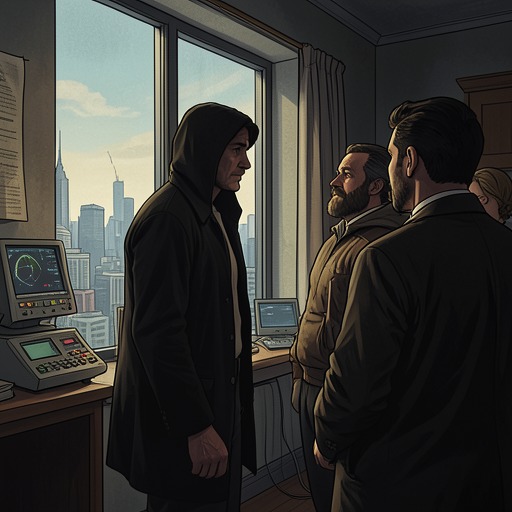
Bronæl’s freedom is conditional. Every new arrival increases the possibility that the Science Board will locate the settlement. The colony therefore faces a contradiction at its center: it must accept people fleeing the same oppressive conditions that created it, but each act of welcome may make concealment more difficult. Brask recognizes the danger without treating it as sufficient reason to close the settlement. He cannot turn away people who want the same form of life he does.
That tension leads directly to the need for government. The community cannot remain only a hidden refuge organized around personal loyalty to Brask and the memory of Din’s defeat. Elections are being planned, and Brask expects to be chosen. His expectation is not presented merely as a claim to authority; he is already thinking about what the colony should become if the inhabitants place responsibility in his hands. The founding therefore includes an unfinished constitutional moment: Bronæl has achieved escape, but it has not yet completed the transition from fugitives gathered together to a political community.
Consequences and Significance
The colony’s immediate achievement is survival with a purpose. Its residents are not simply hiding; they are attempting to build a place where religion can be practiced freely, where newcomers can be received, and where collective decisions can eventually be made through elections. The settlement’s political promise remains fragile because it depends on secrecy, but its existence demonstrates that the fugitives’ resistance has produced more than continued flight.
Brask’s position within this new community also changes. He remains physically weakened and dependent on others while recovering, yet he is already imagining himself as a future elected leader. The contrast between his inability to lift the infants and his readiness to plan the colony’s government gives the founding its distinctive scale: political authority grows out of wounded bodies, childcare, forged deaths, and improvised refuge rather than from an established state apparatus.
Bronæl’s founding also belongs to a broader pattern in which restrictive institutions attempt to regulate identity, belief, and communal knowledge. Elsewhere, sacred or social membership is controlled through public ceremony, guarded secrets, and formal tests. The colony answers that logic through voluntary assembly. Its inhabitants choose one another as fellow refugees, and its projected government is electoral rather than imposed by a priesthood or scientific authority. The result is not a secure utopia—the threat of discovery remains explicit—but a community whose founding principle is that freedom is worth the risk of extending shelter to others.